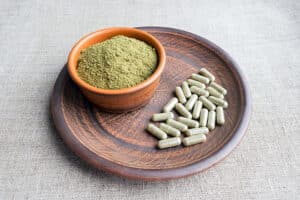
Products containing concentrated 7-hydroxymitragynine, commonly called 7-OH, have become increasingly easy to find in gas stations, smoke shops, convenience stores, and online. They may be sold as tablets, gummies, shots, capsules, powders, extracts, or dissolvable strips, often with packaging that describes them as “natural” or associates them with kratom. But concentrated 7-OH is not the same as traditional kratom leaf, and its federal legal status is now set to change.
The U.S. Drug Enforcement Administration has taken a major step toward removing dangerous concentrated synthetic 7-hydroxymitragynine (7-OH) products from store shelves. On July 1, 2026, the U.S. Drug Enforcement Administration announced its intent to temporarily place 7-OH above a specified concentration threshold into Schedule I of the Controlled Substances Act. The agency is also moving to schedule three related substances: mitragynine pseudoindoxyl, MGM-15, and MGM-16. The notice concerning 7-OH was published in the Federal Register on July 6, 2026, and states that the temporary scheduling order will be published on or after August 5, 2026.
That timing is important. As of July 13, 2026, the DEA has announced and formally published its intent to schedule covered 7-OH products, but the temporary Schedule I order has not yet taken effect. Once the order is issued, manufacturing, distributing, selling, importing, exporting, researching without the required authorization, or possessing 7-OH above the federal threshold will become subject to the controls and penalties that apply to Schedule I substances.
Is 7-OH Illegal Right Now?
At the federal level, covered 7-OH products are not yet Schedule I substances under the DEA’s July 2026 temporary scheduling action. The DEA has issued a formal notice of intent, but the Federal Register states that the temporary scheduling order will be published on or after August 5, 2026. The notice itself does not yet impose the Schedule I controls described in the proposed action.
However, that does not mean every 7-OH product is currently lawful in every circumstance. State and local laws may differ, and products may also be subject to other federal or state rules involving manufacturing, labeling, marketing, food, or drug claims. The FDA has not approved 7-OH as a drug, and the DEA’s notice states that it has not been established as safe or effective for any medical use.
The DEA is targeting products that contain 7-OH above the following limits:
- Botanical kratom material containing more than 0.050% 7-OH by dry weight
- Synthetically produced articles containing more than 0.050% 7-OH or more than 1 milligram of 7-OH per article
- Processed kratom products, including extracts, concentrates, edibles, and pressed pills, that exceed those same concentration or per-article limits
These distinctions are critical. Natural kratom leaf and concentrated synthetic 7-OH are not interchangeable products. Concentrated synthetic 7-OH products are chemically manipulated to deliver opioid-like effects that bear little resemblance to the traditional plant.
What Happens When the Temporary Order Takes Effect?
Under the temporary scheduling process, the DEA must provide at least 30 days’ notice before issuing a final scheduling order. That means the earliest the agency could issue the order would generally be 30 days after the notice was published, although the final order could come later. During this period, concentrated synthetic 7-OH remains subject to existing federal, state, and local laws.
Once the DEA publishes a final temporary scheduling order and that order takes effect, the covered forms of concentrated synthetic 7-OH will be treated as Schedule I controlled substances under federal law. That includes controls and potential administrative, civil, or criminal penalties related to:
- Manufacturing
- Distribution and sale
- Importing or exporting
- Possession
- Research, instructional use, or chemical analysis without the required DEA authorization
The practical effect is that many concentrated 7-OH products currently sold by retail stores and online vendors may no longer be legally manufactured, sold, or possessed once the order becomes effective.
For someone who has developed a physical dependence, this is more than a legal or regulatory update. A sudden loss of access can lead to withdrawal, cravings, or a return to other opioid use. Seeking medical guidance before availability changes can make the transition safer and more manageable.
Why Is Concentrated 7-OH Dangerous?
Concentrated 7-OH is sometimes marketed as a natural or herbal wellness product, but its effects are opioid-like. 7-hydroxymitragynine activates mu-opioid receptors, the same receptor system involved in the effects of morphine and other opioids. Available preclinical evidence associates concentrated 7-OH with tolerance, physical dependence, respiratory depression, and potential for misuse.
Product Strength and Contents May Be Unpredictable
There is no standardized, FDA-approved dose of 7-OH. The DEA reports that no controlled clinical trials have established safe consumption limits or standardized dosing for concentrated products in humans. Its review also found substantial variation among commercial products, with reported amounts ranging from 1 milligram to 700 milligrams per dose or serving.
Consumers may not always know exactly how much they are taking. Product purity, identity, composition, and concentration can vary, and some formulations have been found to contain other opioid-active alkaloids. This variability can make it difficult to predict how strongly a product will affect someone, particularly when switching brands, formulations, or batches.
7-OH Can Cause Opioid-Like Health Effects
Reported adverse effects associated with 7-OH include:
- Nausea and vomiting
- Anxiety, agitation, or confusion
- Sweating and a rapid heart rate
- Insomnia
- Seizures
- Loss of consciousness
- Difficulty breathing
- Dependence and withdrawal symptoms
The FDA has received reports involving addiction, gastrointestinal distress, insomnia, seizures, and withdrawal symptoms such as restlessness, fatigue, irritability, body aches, and cold sweats. Poison-control data reviewed by the DEA also included cases involving serious neurological, cardiovascular, gastrointestinal, and respiratory symptoms.
Signs of 7-OH Dependence: When to Seek Help
Physical dependence can develop when the body adapts to repeated opioid-like substance exposure. Over time, a person may need 7-OH to avoid feeling sick or uncomfortable rather than experiencing its original effects.
Dependence is not a character flaw, a lack of willpower, or proof that someone has failed. It is a medical response that can happen with repeated substance use, and it can be treated.
You may be developing a dependence on 7-OH if you notice that you:
- Need a larger amount or use it more frequently to feel the same effect
- Feel anxious, restless, irritable, or physically unwell when a dose is delayed
- Use 7-OH primarily to feel normal or prevent withdrawal
- Experience strong urges or cravings between doses
- Re-dose more frequently than you planned
- Spend increasing amounts of time or money obtaining and using it
- Have tried to cut back or stop but found it harder than expected
- Continue using despite problems with your health, finances, work, school, or relationships
- Avoid activities, travel, or responsibilities because you are worried about running out
- Return to using it because withdrawal symptoms feel difficult to manage
You do not have to wait for the DEA order to take effect, for products to disappear from shelves, or for the situation to become a crisis. Getting medical support early can help you prepare for withdrawal, understand your treatment options, and build a plan based on your health and recovery goals.
How Brightside Recovery Treats 7-OH Dependence
Because concentrated 7-OH acts on opioid receptors and can produce opioid-like dependence and withdrawal, Brightside Recovery approaches each case leveraging the same evidence-based principles used to evaluate and treat opioid use disorder.
7-OH addiction treatment is individualized. It may include medication, counseling, ongoing medical monitoring, and support for related concerns such as chronic pain, anxiety, depression, sleep difficulties, or the use of other substances.
Treatment Begins with a Complete Assessment
Your provider will start by learning about your experience rather than making assumptions based on a product name. The assessment may cover:
- The specific 7-OH formulations you have used
- Your approximate daily amount and dosing schedule
- Signs of tolerance, cravings, or withdrawal
- Other opioid or substance use
- Previous overdoses or treatment experiences
- Current medications and health conditions
- Mental health and pain-related concerns
- Your home environment, support system, and recovery goals
This information helps the clinical team recommend an appropriate medication, determine when it can be started safely, and build a treatment plan around your individual needs.
Medication Can Be Prescribed to Manage Withdrawal and Cravings
Medication for opioid use disorder can reduce withdrawal symptoms and cravings, helping people stabilize while they work on the behavioral, emotional, and practical parts of recovery. Depending on your assessment and clinical needs, Brightside may discuss options including:
- Suboxone®: Buprenorphine is a medication used to treat opioid use disorders. Suboxone can reduce withdrawal symptoms and cravings without producing the same effect as a full opioid agonist when taken as prescribed.
- Sublocade® or Brixadi®: These medications provide buprenorphine through an extended-release injection rather than requiring the patient to manage a daily dose. Sublocade and Brixadi are FDA-approved for the treatment of opioid use disorder in appropriate patients and must be administered according to their prescribing requirements.
- Vivitrol®: This monthly, non-opioid injection blocks opioid receptors. Vivitrol is FDA-approved to help prevent relapse to opioid dependence after opioid detoxification and is intended to be used with psychosocial support.
Counseling Supports the Medication
Medication can address physical withdrawal and cravings, but recovery also involves understanding what led to continued use and building strategies for what comes next.
Brightside pairs medication with counseling that may help you:
- Identify triggers and high-risk situations
- Manage cravings and difficult emotions
- Develop alternatives for coping with stress or pain
- Repair routines, relationships, and responsibilities affected by use
- Create an overdose- and relapse-prevention plan
- Set realistic recovery goals
- Address anxiety, depression, trauma, or other mental health needs
- Build a support system that can continue beyond the initial withdrawal period
Frequently Asked Questions About the 7-OH Scheduling Action
Is concentrated synthetic 7-OH already a Schedule I drug nationwide?
Not yet solely because of the DEA’s notice of intent. The announcement begins the temporary scheduling process. The federal Schedule I designation will take effect only after the DEA issues and publishes its final temporary scheduling order, expected to occur on August 6, 2026.
What happens if I possess concentrated synthetic 7-OH after the order takes effect?
Once the temporary scheduling order becomes effective, knowingly possessing concentrated synthetic 7-OH products without lawful authorization could violate federal controlled-substance law.
Will stores still be able to sell concentrated synthetic 7-OH?
Once the final order takes effect, unauthorized manufacturing, distribution, and sale of concentrated synthetic 7-OH products will be prohibited under federal law. Retailers, distributors, and manufacturers should review the DEA’s final order carefully and consult legal counsel regarding remaining inventory and compliance obligations.
Does this action ban natural kratom leaf?
The DEA action is intended to target products with elevated levels of synthetic 7-OH, not traditional natural kratom leaf containing trace, unenhanced amounts. The proposed thresholds are designed to distinguish concentrated synthetic 7-OH products from natural plant material. Federal officials have also stated that the action is aimed at concentrated and synthetic products rather than natural kratom leaf.
Consumers should always read product labels carefully. Some products marketed using the word “kratom” may actually contain concentrated or chemically manipulated 7-OH.
Don’t Wait for the Ban to Get Help – Connect with Brightside Today
The DEA’s planned Schedule I action is likely to change how concentrated 7-OH products are sold, distributed, and accessed. For people who use these products regularly, that legal change may also create an immediate health concern: withdrawal, cravings, or a return to other opioid use when supply becomes limited.
You do not have to wait for the federal order to take effect, for products to disappear from shelves, or for your symptoms to become severe before reaching out. Brightside Recovery provides confidential assessments and individualized treatment for people experiencing 7-OH dependence or withdrawal. A provider can help you understand your options, reduce the risks of stopping without support, and develop a recovery plan that considers your health, history, and goals.
If you or a loved one is worried about 7-OH use, connect with Brightside to start your journey to long-lasting recovery.