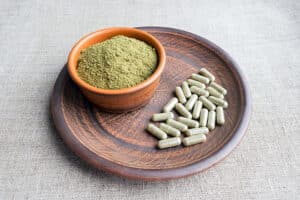
7-OH products have become increasingly visible, often sold in tablets, gummies, powders, extracts, and other easy-to-use formats that may look like supplements or other everyday consumer goods. But public health agencies are warning that concentrated forms of 7-hydroxymitragynine, or 7-OH, can carry much more serious risks than their packaging or availability may suggest.
The U.S. Drug Enforcement Administration has begun the process of temporarily placing higher-concentration 7-OH products into Schedule I under the Controlled Substances Act. While that scheduling process is separate from public health warnings, both developments reflect many of the same concerns about the rapid growth of concentrated 7-OH products and the potential risks associated with their use.
So, why are health agencies sounding the alarm now? Understanding what these warnings actually say, and what they do and do not mean, can help people make more informed decisions about 7-OH use, dependence, and treatment.
What Are Public Health Agencies Warning People About?
Warnings about 7-OH have come from several levels of the public health system, including the FDA, poison control organizations, and state and local health departments. Although the wording differs from agency to agency, the central concern is consistent: highly concentrated 7-OH products may expose consumers to opioid-like effects and health risks that are easy to underestimate.
The FDA recommends that consumers avoid products containing 7-OH as an added ingredient or at enhanced levels, including those marketed as foods, dietary supplements, or treatments for health conditions. The agency has also issued warning letters to companies who are marketing products containing 7-OH. Federal officials have emphasized an important distinction: these actions are focused on elevated or concentrated 7-OH, not simply the trace amounts that can occur naturally in kratom leaf.
Poison control data has added urgency to those warnings. According to America’s Poison Centers, there were 593 reported exposures involving 7-OH in all of 2025, compared with 901 from January 1 through June 30, 2026. Average monthly case counts during the first half of 2026 were 102% higher than during the final six months of 2025. Among reported exposures involving 7-OH alone, 38.8% had serious health problems, 63.8% were treated at a healthcare facility, and 20.5% were hospitalized.
State and local agencies have raised similar concerns. The Texas Department of State Health Services has warned consumers not to use 7-OH products, citing the potential for significant health problems, dependence, and abuse at high concentrations. In California, the Los Angeles County Department of Public Health issued an alert after identifying fatal overdoses associated with 7-OH.
Why Are Agencies So Concerned About Concentrated 7-OH?
The concern surrounding concentrated 7-OH is not based on a single factor. Public health agencies are looking at how the substance affects the body, how commercial products differ from traditional kratom, how they are marketed and sold, and the types of adverse effects being reported to poison centers. Together, these issues have led agencies such as the FDA, CDC, and DEA to view high-concentration 7-OH products as an emerging public health concern.
- 7-OH Acts on Opioid Receptors: 7-OH is a mu-opioid receptor agonist, meaning it interacts with the same receptor system involved in the effects of opioids and can cause tolerance, physical dependence, addiction, and respiratory depression. That does not mean every person who uses 7-OH will experience these effects, but it helps explain why agencies are treating concentrated products differently from conventional supplements or traditional kratom preparations.
- Concentrated 7-OH Products Are Very Different from Traditional Kratom Leaf: Naturally occurring 7-OH is present in kratom in trace amounts. Commercial products, however, can contain isolated or enhanced concentrations of the compound. The FDA specifically distinguishes these products from natural kratom leaf, and the CDC has described the emergence of high-potency products enriched with isolated 7-OH as a significant shift in the U.S. kratom market.
- Consumers May Not Always Know What They’re Taking: Concentrated 7-OH is sold in a variety of formats, including tablets, gummies, shots, powders, and sublingual products. FDA warning letters show that marketed products have contained substantially different labeled amounts of 7-OH, including tablets ranging from roughly 14 mg to 60 mg in examples cited by the agency. That variability can make it harder for consumers to judge the strength of one product against another or understand how much 7-OH they are consuming.
- Repeated Use Can Lead to Dependence and Withdrawal: One of the major concerns with regular 7-OH use is the potential for physical dependence. As tolerance develops, a person may begin using larger amounts or taking the substance more frequently to achieve the same effects or avoid withdrawal.
- Using 7-OH Alongside Other Substances Can Complicate the Risks: Public health officials are also concerned about situations involving more than one substance. The CDC’s analysis of kratom-related poison center reports found that reports involving multiple substances were more likely to result in serious medical outcomes than reports involving kratom alone.
How Does the DEA’s 2026 Scheduling Action Fit into These Warnings?
The DEA’s scheduling action reflects many of the same concerns that have driven public health warnings about concentrated 7-OH. It is another response to the same underlying trend: concentrated 7-OH products have become more widely available while poison centers and health officials are reporting increasing concerns about dependence, poisoning, and other serious effects.
The action is specifically aimed at products containing elevated concentrations of 7-OH rather than traditional kratom leaf containing only small, naturally occurring amounts. The DEA cited factors including the substance’s opioid-like effects, potential for dependence and abuse, growing commercial availability, and reports of adverse health outcomes when explaining the decision.
Importantly, the DEA’s July notice is part of a temporary scheduling process. The notice states that the Schedule I controls take effect when the agency publishes a subsequent temporary scheduling order in the Federal Register. Once those controls take effect, covered 7-OH products would be subject to the federal restrictions that apply to Schedule I controlled substances.
What Should You Do If Someone Has a Bad Reaction to 7-OH?
Bad reactions to 7-OH can range from nausea, confusion, and excessive sleepiness to more serious symptoms such as seizures, loss of consciousness, trouble breathing, or respiratory depression. America’s Poison Centers lists these among the symptoms reported after 7-OH use.
If someone is unresponsive, having difficulty breathing, having a seizure, or otherwise appears to need urgent medical attention, call 911 immediately. Because 7-OH can produce opioid-like respiratory depression, naloxone may also be relevant in a suspected overdose.
For a reaction that does not appear immediately life-threatening, or if you are unsure what to do, contact the Poison Help line at 1-800-222-1222. Poison centers provide free, confidential guidance from toxicology specialists 24 hours a day, seven days a week.
Frequently Asked Questions About 7-OH Warnings
Is 7-OH an opioid?
7-OH is not the same substance as prescription opioids such as oxycodone or morphine, but it acts on mu-opioid receptors and can produce opioid-like effects. The DEA has cited its opioid activity when discussing risks such as tolerance, physical dependence, respiratory depression, and abuse.
Is 7-OH Schedule I?
As of August 18, 2026, the DEA has published a Notice of Intent to temporarily place 7-OH above specified concentration thresholds into Schedule I. The notice states that Schedule I controls will take effect when a subsequent temporary scheduling order is published in the Federal Register. Because the regulatory status is developing, consumers should check current federal and state laws for the latest information.
What should I do if I want to stop using 7-OH?
If you are using 7-OH regularly, experiencing withdrawal between doses, or having difficulty cutting back, a healthcare provider can help assess your use and discuss appropriate options. Brightside Recovery offers a 7-OH addiction treatment program that provides individualized care based on each patient’s needs, medical history, and recovery goals.
Get the Help You Need for 7-OH Dependence at Brightside Recovery
Public health warnings about concentrated 7-OH are also an important reminder that dependence can develop with repeated use. If you are experiencing withdrawal, cravings, increasing tolerance, or difficulty cutting back, it may be time to talk with a healthcare professional.
Changes in 7-OH’s legal status may affect availability, but they do not address dependence on their own. Brightside Recovery offers an individualized 7-OH addiction treatment program for people who want help with reducing or stopping their use.
If you are concerned about your own 7-OH use or that of someone you care about, contact Brightside Recovery to learn more about available treatment options.